More Products Coming Soon

Learn
Everything you need to know about feeding and supporting a working dog — written by a handler, not a marketing team.
Why a working dog needs more than a good diet?
A commercial dog food — even a good one — is formulated for an average dog living an average life. Your hunting dog is not that dog. On a working day, it may cover 30–60km of terrain, sustain a heart rate of 150–200bpm for hours, lose significant fluid and electrolytes through exertion, and subject its joints and connective tissue to repeated mechanical stress that no domestic dog ever experiences. The gap between what a standard diet provides and what a working day demands is where supplements live.
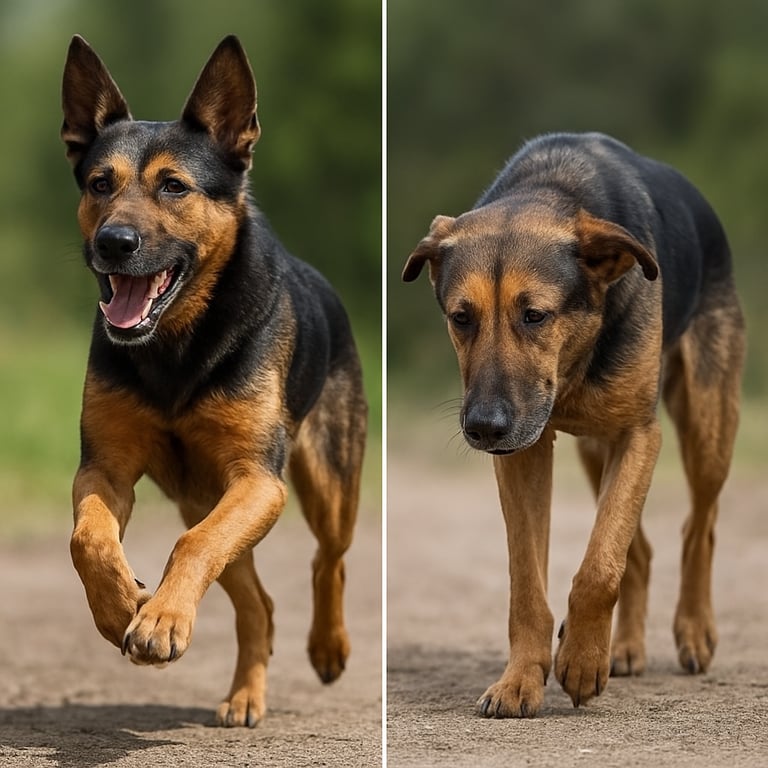
The recovery deficit
Physical output depletes electrolytes, glycogen, and specific micronutrients faster than food alone can replace. Without supplementation, the dog operates in an energy and mineral deficit for part of every working day — which shows up as reduced drive in the third hour, slower recovery overnight, and accumulated wear across a season.
Joint wear, connective tissue fatigue, and nutritional gaps do not show up after one day. They accumulate across October, November, December — and the dog that was sound in September is stiff by January not because of one bad day but because nothing was protecting the structures that repeated work degrades. Prevention is the point.
The cumulative season problem


The performance gap
What happens in the 30 minutes after exercise determines how the dog feels tomorrow morning. A dog that finishes a 6-hour hunt and receives plain water and food is not recovering as effectively as one that receives a targeted post-exercise formula. The difference is visible within days and decisive across a full season.
Canine Complete
Contact
hello@caninecomplete.eu
+357 97947155
© 2026. All rights reserved.